
What Is Naftalan Oil? The History of Naftalan Oil to the Present Day
The composition of Naftalan oil, how it differs from ordinary crude oil, and its history from caravan routes to modern sanatoriums.
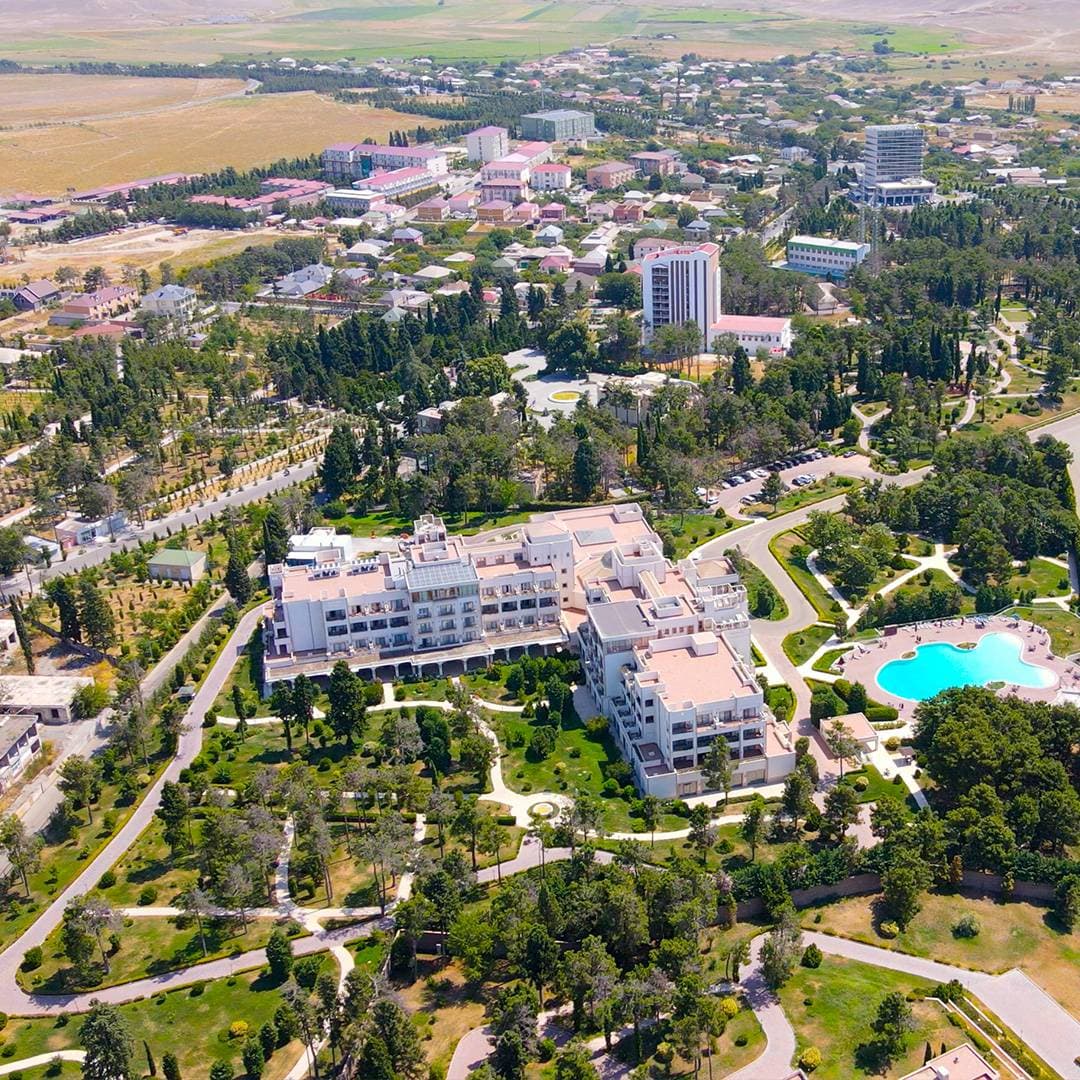
Naftalan oil is one of the natural resources that have helped make Azerbaijan known around the world. Distinguished by its unique composition, this oil has been used for therapeutic purposes for centuries and has played a key role in turning the town of Naftalan into a centre of health tourism. The history of Naftalan oil stretches from ancient times through industrial processing in the 19th century and scientific research in the 20th century to its use in modern sanatoriums.
So what is Naftalan oil, what sets it apart from ordinary oil, and how long have people been using this natural resource? Answering these questions helps us better understand the history of Naftalan treatment and its significance today.
What Is Naftalan Oil?
Naftalan oil is a type of natural oil with a distinctive physicochemical composition, associated with the town of Naftalan in Azerbaijan and the surrounding area. Unlike ordinary industrial oil, it contains few light hydrocarbon fractions, or, given its characteristic properties, none at all. Naphthenic hydrocarbons hold a special place among the main components that distinguish Naftalan oil.
Naftalan oil is notable for its dark brown colour, distinctive smell and high viscosity. These properties set it apart from the oils used as industrial fuel. The main significance of Naftalan oil lies in its use in certain balneological and therapeutic procedures.
Preparations made from Naftalan oil have historically been used for a variety of purposes. Today, this natural resource is known mainly for the procedures carried out under medical supervision in sanatoriums and health centres.
The therapeutic properties of Naftalan oil are linked to its chemical composition. However, the fact that it is natural does not mean it is suitable for every condition or completely safe. Its use for treatment should be assessed on the basis of a person's health and medical indications.
What Makes Naftalan Oil Different from Ordinary Oil?
The defining feature of Naftalan oil is the structure of the hydrocarbons it contains and its physicochemical characteristics. Crude oil extracted from ordinary oil fields is used mainly to produce fuel and industrial products. Naftalan oil, by contrast, has traditionally been associated with therapeutic and health-related uses.
In addition to naphthenic hydrocarbons, it contains aromatic hydrocarbons, resinous substances, naphthenic acids, sulphur and nitrogen compounds, as well as certain trace elements. The exact composition can vary depending on the oil sample and the layer it comes from.
The properties of Naftalan oil distinguish it from other types of natural oil. However, it would be wrong to claim on the basis of these differences that it works against every disease. The results of specific procedures depend on the type of condition, the person's individual characteristics and the treatment programme.
Studying the composition of Naftalan oil has been one of the main areas of both historical and modern scientific research. This research makes it possible to better understand the properties of this natural resource and to evaluate its medical use.
The Ancient History of Naftalan Oil
The history of Naftalan oil cannot be tied solely to the start of industrial extraction. Accounts of this natural resource being used for therapeutic purposes go back to the Middle Ages.
The places in the Naftalan area where natural oil seeped to the surface attracted people's attention even in ancient times. According to historical legends, local residents and merchants passing through the region noticed that this oil was used for certain skin problems. Over time, knowledge of where the oil collected and how it was used spread over a wider area.
The origin of the name Naftalan is also linked to oil. It is thought that the name arose from the extraction and sale of oil. However, there are different explanations for the exact etymology of the word.
In ancient times, there was no modern medical research and there were no standardised treatment protocols. That is why information about the historical use of Naftalan oil should be evaluated in the context of the observations and traditions of that era.
The Legend of Naftalan Oil
One of the best-known legends about the history of Naftalan oil is the story of a sick camel. According to the legend, merchants travelling with a caravan left one of their sick, weak camels in an area with pools of oil. When they returned some time later, they saw that the camel's condition had improved.
After noticing that the camel had been lying in the oily patches, the merchants thought the substance might be used on people too. They then began taking the oil with them and applying it to wounds.
This story is a folk legend about how Naftalan oil became famous. It is more accurate to regard it not as historical fact but as a cultural tale that explains the region's healing tradition.
Naftalan Oil in the Works of Nizami Ganjavi and Marco Polo
When discussing the history of Naftalan oil, written sources from the Middle Ages are also particularly important. In this context, the works of Nizami Ganjavi, a prominent figure in Azerbaijani literature, and the notes of the traveller Marco Polo are often mentioned.
Historical interpretations of the works Nizami Ganjavi wrote in the 12th century draw attention to information about oil from the region being transported by caravan and used for therapeutic purposes. In particular, accounts of oil transport linked to the village of Safikurd feature in discussions of how Naftalan oil was known in ancient times.
The travel notes of Marco Polo, who passed through Azerbaijan in the 13th century, are also said to contain information about the oil fields in this region and the use of an oil-like substance.
These historical references show that Naftalan oil has attracted attention for a long time. At the same time, it is important not to equate the information in medieval texts with modern scientific evidence. These texts mainly help us understand the knowledge, trade links and traditions of use that existed at the time.
Industrial Extraction of Naftalan Oil in the 19th Century
The 19th century is considered an important turning point in the history of Naftalan oil. During this period, interest in this natural resource grew, and its extraction and processing began to take on a more systematic character.
Among the entrepreneurs who took an interest in the Naftalan deposit in the second half of the 19th century, the German-born engineer Julius Johann Jaeger holds a special place. According to historical records, in the 1890s Jaeger carried out drilling to extract Naftalan oil and set up a small production facility to make products from it.
The absence in Naftalan oil of the light fractions typical of ordinary fuel oils initially created different expectations regarding its industrial use. Later, however, the oil's known therapeutic traditions came into focus, and various preparations began to be produced from it.
During this period, products made under the Naftalan name began to gain recognition not only in Azerbaijan but in other countries as well. The spread in international trade of preparations brought to various markets through Germany increased the fame of Naftalan oil.
At the end of the 19th century, doctors also began to share their observations on the use of this oil. In this way, a tradition of use that began as folk practice gradually became a subject of medical discussion and scientific research.
Naftalan Oil Gains Worldwide Recognition in the Early 20th Century
In the early 20th century, the spread of products made with Naftalan oil to various countries opened a new chapter in its history. During this period, preparations and ointments under the Naftalan name were known on international markets.
The positive views on Naftalan oil expressed in 1903 by the German dermatologist Paul Gerson Unna are frequently mentioned in historical sources. At the time, statements like these helped increase interest in the product and spread its name more widely.
There are also historical accounts of Naftalan ointments being found among the medical supplies of Japanese soldiers during the Russo-Japanese War of 1904-1905. This episode is cited as one example of how Naftalan preparations were known in various countries at that time.
Even so, historical popularity is not considered full proof of medical effectiveness by today's standards. The results of using Naftalan oil for specific conditions should be considered on the basis of scientific research, clinical evaluation and individual medical indications.
The Founding and Development of the Naftalan Resort
The next important stage in the history of Naftalan oil is linked to the development of resort infrastructure. As interest in the therapeutic use of the oil grew, the region needed facilities to organise these services.
In the first half of the 20th century, steps were taken to study Naftalan's therapeutic resources more systematically and to develop its potential as a resort. From the 1920s onwards, research into the oil's composition and possible medical applications expanded. As the resort took shape, Naftalan became a place of treatment and relaxation for people from various regions.
In the 1930s, research was carried out into the biological properties of Naftalan oil. The creation of a dedicated laboratory in 1938 was one of the significant steps in the development of scientific research in this field.
In the years that followed, the Naftalan resort expanded and became known for its sanatorium infrastructure, with medical services, accommodation and leisure facilities developing side by side. The resort became important not only for local people but also for guests from other countries.
In 1967, Naftalan was granted the status of a city of republican subordination, an important milestone in its administrative and economic development. In the decades that followed, the resort's infrastructure expanded and Naftalan strengthened its position as one of Azerbaijan's health tourism destinations.
Scientific Research into Naftalan Oil
The history of Naftalan oil is not just a story of traditional use. Its chemical composition, physical properties and biological effects have also long been the subject of scientific interest.
In the 20th century, Azerbaijani scientists contributed to research into the properties of Naftalan oil. Academician Yusif Mammadaliyev and other researchers carried out work on the oil's composition. This research helped evaluate the physicochemical characteristics of different samples and identify the differences between them.
Because the composition of Naftalan oil is complex, several factors need to be taken into account when studying its biological effects. Various hydrocarbons and other compounds influence the oil's physicochemical properties. For this reason, its composition, method of use and safety must be assessed together in order to define where it can be applied.
The main aim of the modern approach is to compare observations on traditional use with scientific data and to determine more precisely in which cases procedures may be beneficial. This approach is important both for patient safety and for a sound evaluation of the medical use of Naftalan oil.
How Is Naftalan Oil Used Today?
Today, Naftalan oil is used mainly as part of the therapeutic procedures offered at sanatoriums and health centres in the town of Naftalan. Guests at the resort may be offered accommodation, medical consultations, physiotherapy and various health services.
One of the best-known procedures involving Naftalan oil is the Naftalan bath, during which the oil is applied in a special way. The length of treatment, the number of sessions and other conditions are determined on the basis of a doctor's assessment.
A doctor may consider Naftalan treatment for some musculoskeletal problems and certain skin conditions. However, it should not be assumed that the procedure is suitable for every patient. Chronic illnesses, cardiovascular problems, acute infections and other health conditions can affect the treatment decision.
Before starting treatment at a Naftalan sanatorium, it is important to have a medical examination, tell the doctor about any existing conditions and agree on an individual treatment plan.
Naftalan Oil Treatment and Health Tourism
Naftalan oil is one of the resources at the heart of the town's health tourism. Today, guests who come to Naftalan can both make use of traditional treatment procedures and relax in a sanatorium setting.
The town has sanatoriums, health centres and spa complexes of various standards. Their services, accommodation and treatment programmes can differ from one another, so when choosing, you should consider not only a hotel's appearance and price but also the medical services it offers.
When choosing a Naftalan sanatorium, check whether an initial medical examination is available, whether procedures are included in the price, the length of stay and the cost of extra services. This information helps you plan your trip budget properly and choose a suitable facility.
The long history of Naftalan oil, combined with the town's modern tourism facilities, gives the region special appeal. Even so, the core principle of health tourism is to organise medical services around individual needs and to protect patient safety.
The Future of Naftalan Oil
Naftalan oil is an important part of Azerbaijan's natural and historical heritage. Its future development depends on supporting traditional practice with scientific research, raising the quality of medical services and improving health tourism infrastructure.
In modern sanatoriums, the organisation of medical services, patient safety, transparency of services and an individual approach are becoming increasingly important. Progress in these areas could make Naftalan more attractive to both local and international guests.
Studying the history of Naftalan oil is not simply a look at the past. This history shows how natural resources, scientific research and medical services have developed over time. Naftalan's future potential also depends on bringing these factors together responsibly.
Frequently Asked Questions
What is Naftalan oil?
Naftalan oil is a type of natural oil with a distinctive physicochemical composition, associated with the Naftalan region of Azerbaijan. It is traditionally used in certain therapeutic procedures. Its medical use should be assessed on the basis of a doctor's recommendation and the individual's health.
When does the history of Naftalan oil begin?
Written accounts of Naftalan oil being used for therapeutic purposes go back to the Middle Ages. In the late 19th century, its industrial extraction and processing began to develop. In the 20th century, work on studying the oil's composition and building resort infrastructure expanded.
How is Naftalan oil different from ordinary oil?
Naftalan oil differs from ordinary industrial oil in its chemical composition, hydrocarbon structure and physical properties. It is known mainly not for fuel production but for its traditional therapeutic uses. Its compositional features do not guarantee effectiveness for any specific condition.
Which conditions is Naftalan oil used for?
A doctor may consider Naftalan oil procedures for some musculoskeletal conditions and certain skin problems. Whether treatment is suitable depends on the diagnosis, the stage of the condition and any accompanying health problems. A medical examination is essential before starting procedures.
Are Naftalan baths safe?
The safety of Naftalan baths depends on a person's health and any possible contraindications. For this reason, the procedure should be carried out under medical supervision and after an appropriate medical assessment. Prescribing yourself a course of treatment is not recommended.